David Russell · 2 November 2026
Data Standardization Challenges in Manufacturing: Insights from Platform Adoption Cases
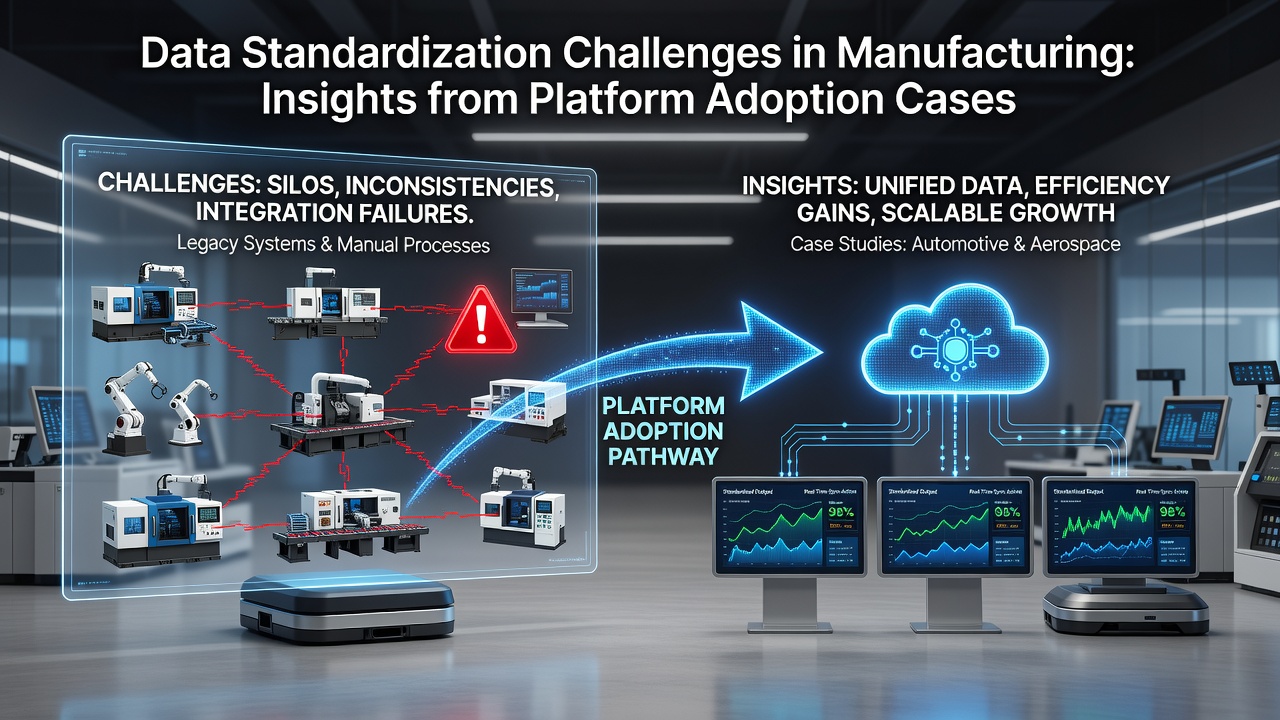
Manufacturing operations generate vast amounts of data from sensors, production lines, and supply networks, yet inconsistencies in formats and structures often create barriers when companies adopt new platforms. Researchers at institutions across North America and Europe have documented how these issues surface during transitions to centralized systems, where legacy equipment outputs data in proprietary formats that resist easy mapping to modern schemas. Studies from 2024 through 2026 show that firms attempting platform rollouts encounter delays when data fields for metrics like temperature, pressure, and throughput fail to align across departments or sites.
Core Issues in Data Formats and Integration
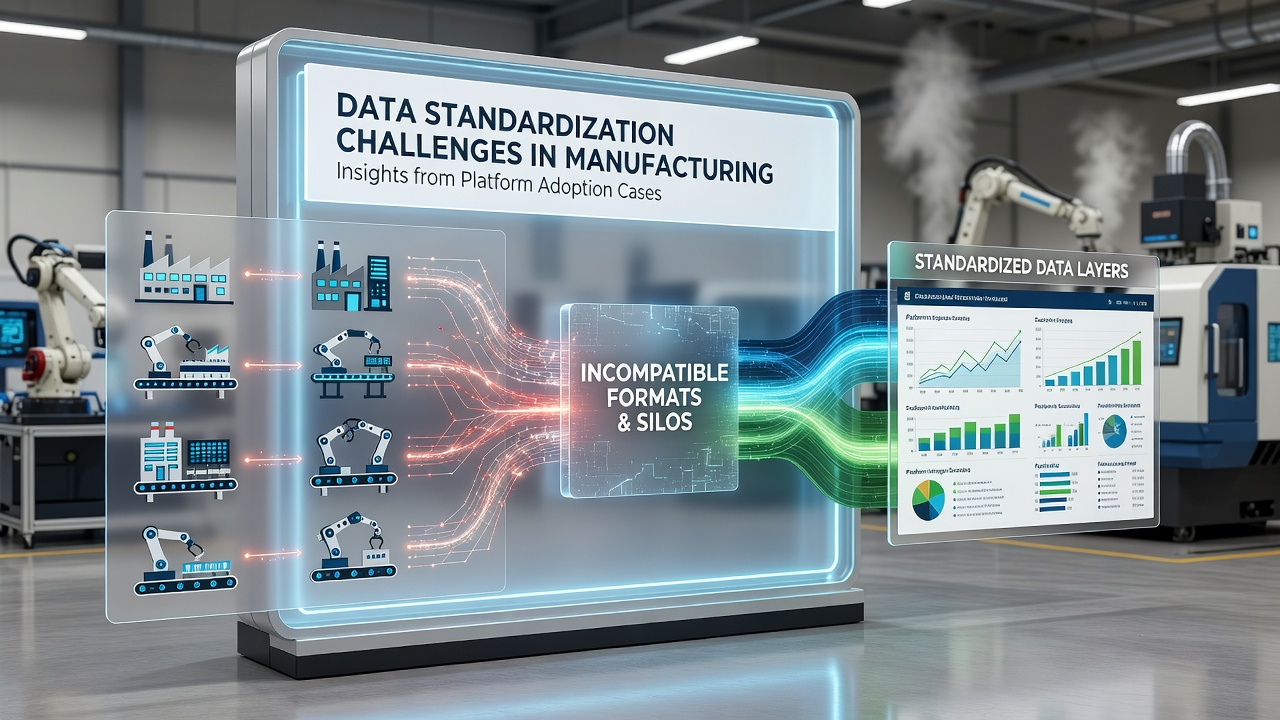
Platform adoption cases reveal recurring patterns where equipment from different vendors records identical measurements using incompatible units or naming conventions, forcing manual reconciliation that slows decision cycles. Observers note that automotive assembly plants in the Midwest United States frequently report mismatches between robotic arm logs and quality control databases, because one system timestamps events in milliseconds while another uses Unix epochs. Data shows these discrepancies compound when scaling to multi-site operations, as each facility maintains its own calibration standards without a shared reference model.
Integration difficulties extend beyond formats to metadata handling, where contextual details such as batch numbers or operator identifiers drop out during transfers between older PLCs and cloud-based analytics tools. Reports from the National Institute of Standards and Technology highlight how incomplete metadata undermines traceability requirements in regulated sectors like aerospace and pharmaceuticals. Those who've examined adoption timelines in November 2026 note that several European manufacturers postponed full platform migrations after discovering that sensor arrays installed in 2018 produced JSON structures incompatible with the structured query languages expected by their chosen enterprise systems.
Legacy Systems and Organizational Factors
Legacy infrastructure remains a persistent obstacle, because decades-old machinery lacks native support for contemporary data exchange protocols such as OPC UA or MQTT. Case analyses indicate that companies in heavy machinery sectors often retrofit adapters, yet these solutions introduce latency and occasional data loss during high-volume production runs. Workers at facilities transitioning to unified platforms describe situations where historical records stored in spreadsheet repositories cannot be ingested without extensive cleaning, leading to gaps in trend analysis that affect predictive maintenance schedules.
Organizational silos further complicate standardization efforts, since engineering teams prioritize operational metrics while finance departments focus on cost-per-unit calculations that use different aggregation rules. Evidence from platform implementation projects demonstrates that without cross-functional data governance frameworks, duplicate entries and conflicting definitions proliferate across shared repositories. Australian research institutions tracking similar transitions have found that firms investing in upfront ontology development reduce reconciliation time by measurable margins compared with those addressing inconsistencies reactively.
Insights from Recent Adoption Cases
One documented rollout at a Canadian automotive supplier illustrated how mismatched data granularity across welding robots and assembly conveyors prevented accurate overall equipment effectiveness calculations until a common schema was enforced. The project team mapped every variable to a central dictionary before migration, which extended the timeline but enabled consistent reporting once live. Similar patterns appear in Asian electronics manufacturers where platform vendors supplied pre-built connectors that still required customization to handle regional regulatory reporting fields absent from the base software.
European Union initiatives around digital product passports have accelerated standardization demands, because manufacturers must now compile material composition and lifecycle data in machine-readable formats for compliance. Figures from industry consortia reveal that early adopters who aligned internal platforms with emerging ISO 8000 data quality standards encountered fewer downstream integration errors than peers relying on ad-hoc mappings. In November 2026, several German Mittelstand companies reported completing platform transitions that incorporated these standards, resulting in streamlined audits and reduced manual data entry across their supplier networks.
Another case from a Brazilian steel producer showed how real-time sensor data from blast furnaces arrived in varying sampling rates, making correlation with energy consumption logs difficult until resampling algorithms were applied during ingestion. Platform logs from the deployment indicated that standardization reduced the volume of rejected records by over 40 percent within the first quarter of operation. Researchers tracking these outcomes emphasize that success hinged on establishing data stewardship roles early rather than treating standardization as a purely technical exercise.
Conclusion
Platform adoption continues to expose data standardization challenges rooted in format diversity, legacy constraints, and fragmented governance across manufacturing environments. Cases from multiple regions demonstrate that structured mapping, shared ontologies, and cross-departmental coordination produce measurable improvements in data usability once implemented. Ongoing work by standards bodies and research organizations supplies reference models that firms can adapt, though each implementation still requires site-specific adjustments to address unique equipment profiles and regulatory contexts.