Lars Lang · 5 October 2026
Strategies for Optimizing Data Flow in Multi-Source Integration Environments for Market Research Analysts
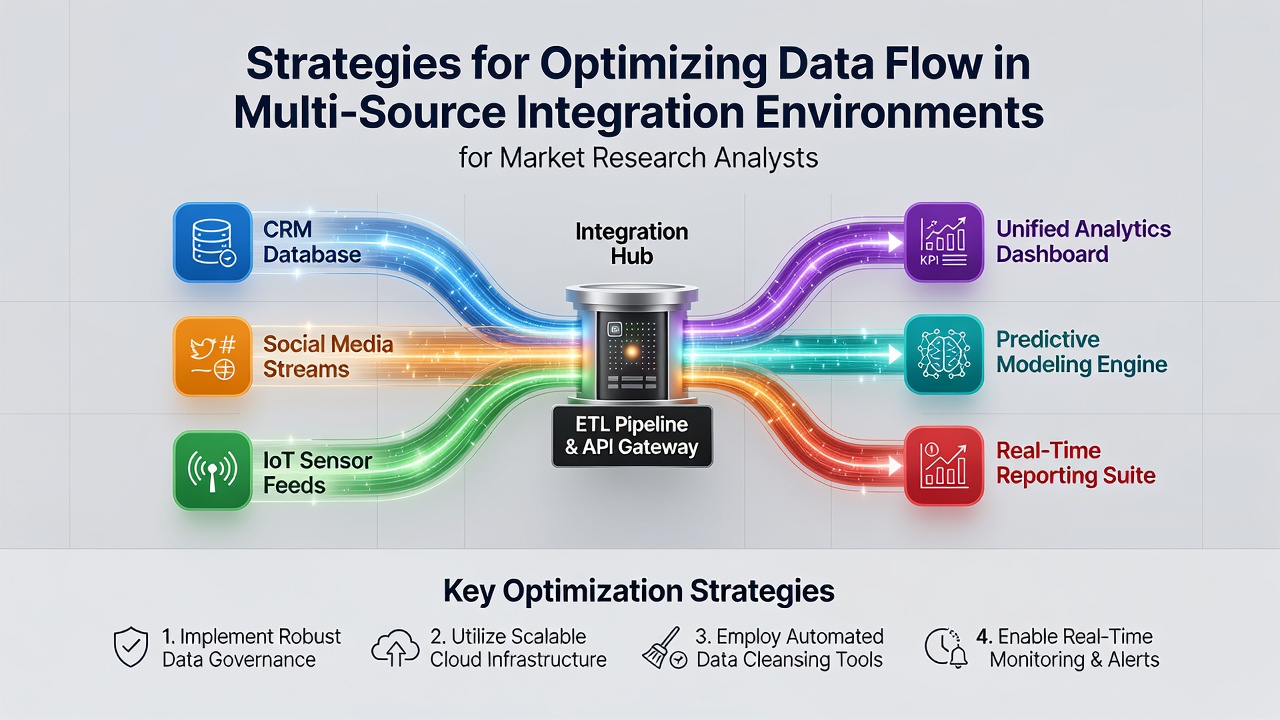
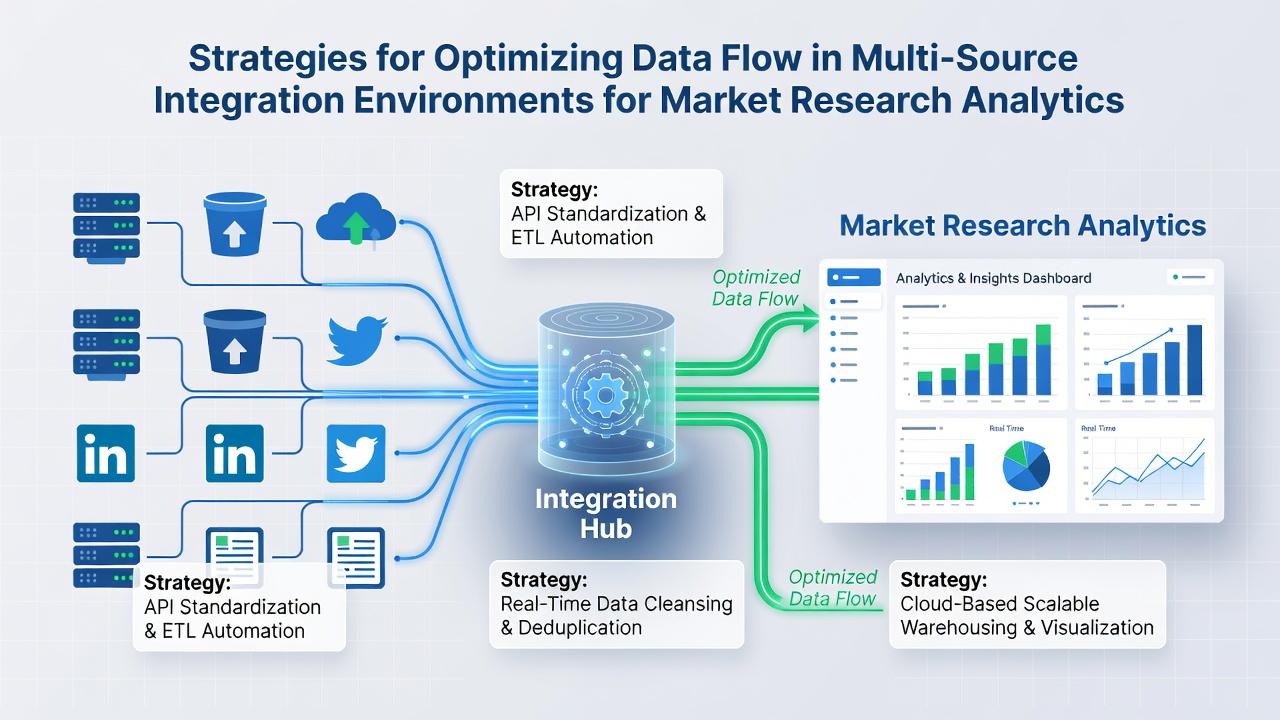
Market research analysts routinely pull information from surveys, transaction logs, social media feeds, and syndicated databases, and they face the ongoing task of moving that data through pipelines without creating bottlenecks or introducing errors. Effective optimization begins with mapping every source to a common schema early in the process, which reduces the need for repeated transformations later on and allows teams to spot inconsistencies before they reach downstream models.
Core Challenges in Multi-Source Environments
Analysts encounter mismatched formats, varying update frequencies, and inconsistent identifiers across platforms, while latency spikes occur when high-volume feeds compete for the same processing resources. Data quality issues compound these problems because incomplete records from one source can corrupt aggregates drawn from others, and security requirements often demand encryption at each hop without slowing the overall flow.
Establishing Standardized Data Protocols
Teams that adopt uniform metadata standards and shared vocabularies see faster ingestion times because downstream systems no longer need custom parsers for every incoming stream. Researchers at Statistics Canada have documented how common identifier frameworks cut reconciliation time by nearly half in large-scale consumer studies, and analysts who apply similar mappings report fewer manual interventions during quarterly reporting cycles.
Selecting Integration Architectures
Batch processing suits historical trend analysis where daily or weekly refreshes meet requirements, yet real-time streaming becomes necessary when tracking live campaign performance or sudden shifts in consumer sentiment. Hybrid setups that route critical metrics through streaming layers while archiving bulk data in batches give analysts flexibility without overloading any single pathway. Observers note that organizations using message queues such as Apache Kafka maintain steadier throughput even when one source experiences temporary outages.
Implementing Governance and Quality Controls
Automated validation rules applied at ingestion points catch format deviations and missing values before they propagate, and audit trails record every transformation so analysts can trace anomalies back to their origin. In October 2026 the European Commission published updated interoperability guidelines that emphasize machine-readable data dictionaries, prompting many research firms to embed these specifications directly into their pipelines. Analysts who align their governance layers with such frameworks reduce compliance review cycles and maintain clearer documentation for stakeholders.
Leveraging Automation and Monitoring Tools
Scripted orchestration platforms schedule and monitor jobs across environments, alerting teams when throughput drops below defined thresholds or when error rates exceed historical baselines. One study from the Australian Bureau of Statistics highlighted how proactive monitoring cut unplanned downtime by 35 percent in multi-source economic indicator projects, allowing analysts to focus on interpretation rather than firefighting. Integration with visualization layers further helps because anomalies appear in dashboards before final reports are generated.
Practical Examples from Market Research Practice
A consumer goods company combined point-of-sale feeds with online survey responses and social listening data by first normalizing product codes and timestamps, then routing everything through a central validation service that flagged duplicates in real time. The resulting dataset supported weekly brand-health tracking without the previous month-long lag. Another project at a financial services firm used incremental loading strategies to merge regulatory filings with internal CRM exports, achieving daily updates while satisfying audit requirements from multiple jurisdictions.
Those who have studied these implementations emphasize that success depends on documenting assumptions at each integration step and maintaining version control over transformation logic. When new sources appear, analysts can extend existing mappings rather than rebuild entire pipelines from scratch.
Conclusion
Optimizing data flow in multi-source environments requires coordinated choices around standardization, architecture, governance, and monitoring, and market research analysts who apply these approaches consistently deliver timely insights even as data volumes grow. Continued alignment with emerging interoperability standards, including those released in October 2026, supports scalable operations across diverse source landscapes.